Here is my evaluation of a film opening. I decided on evaluating the film 'The Call' starring Halle Berry as it is a film I enjoyed watching and because it is a thriller, I thought it would be interesting to analyse to see what kind of aspects we could use in our own opening.
Friday, 5 February 2016


Monday, 1 February 2016
Evaluation of Preliminary Task: Jasleen
For our preliminary task,
we were asked to construct a short clip that contained the three important
principles of filming, and these are; Match on action, Shot-reverse shot and
the 180-degree rule. We were
also asked to make sure there was continuity editing present, continuity editing is the
predominant style of film editing in the post-production process of film making of narrative films and television programs. The purpose of continuity editing is to smooth over the inherent discontinuity of
the editing process and to establish a logical
coherence between shots.
These are
the three important principals of filming:
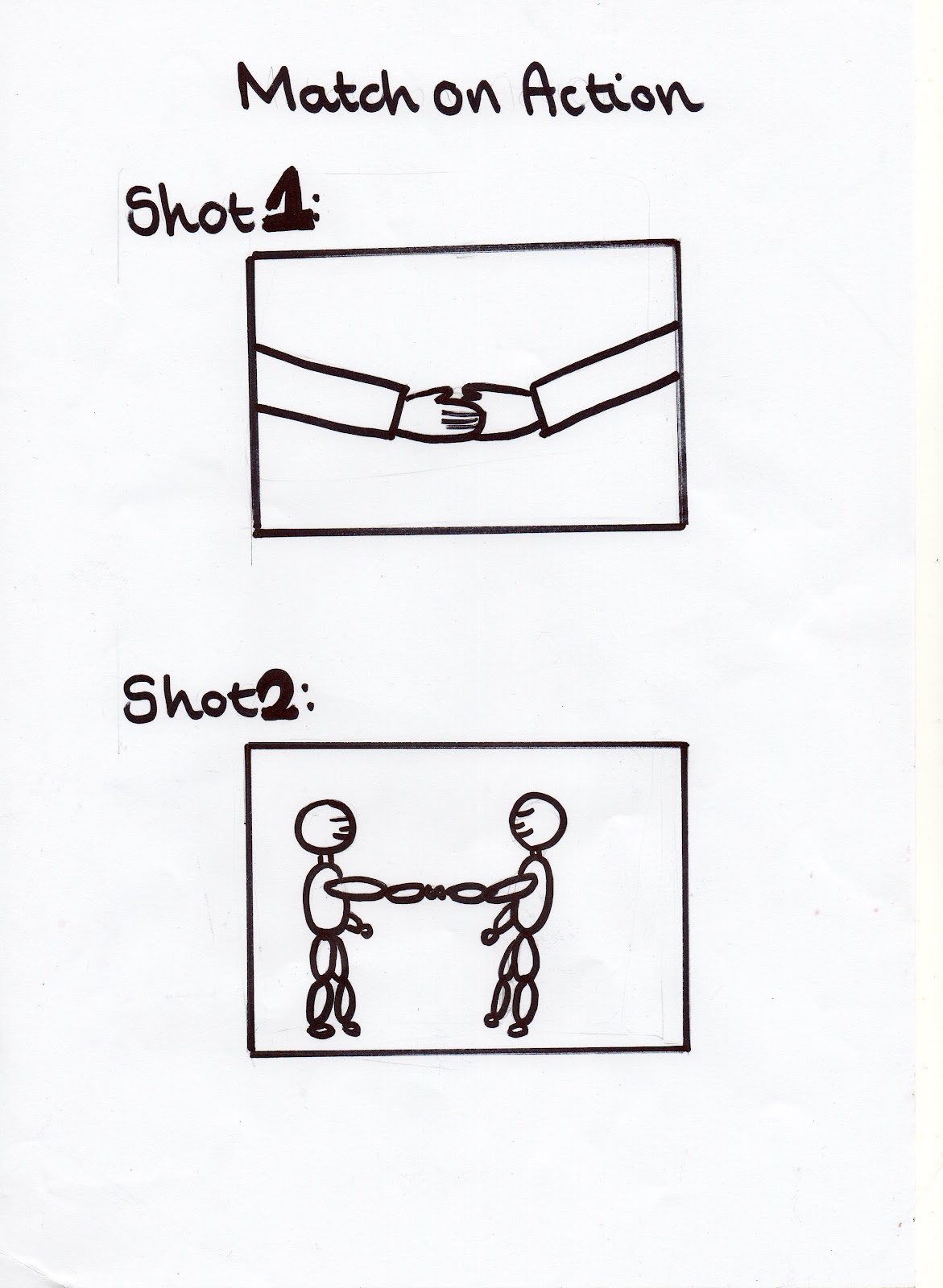 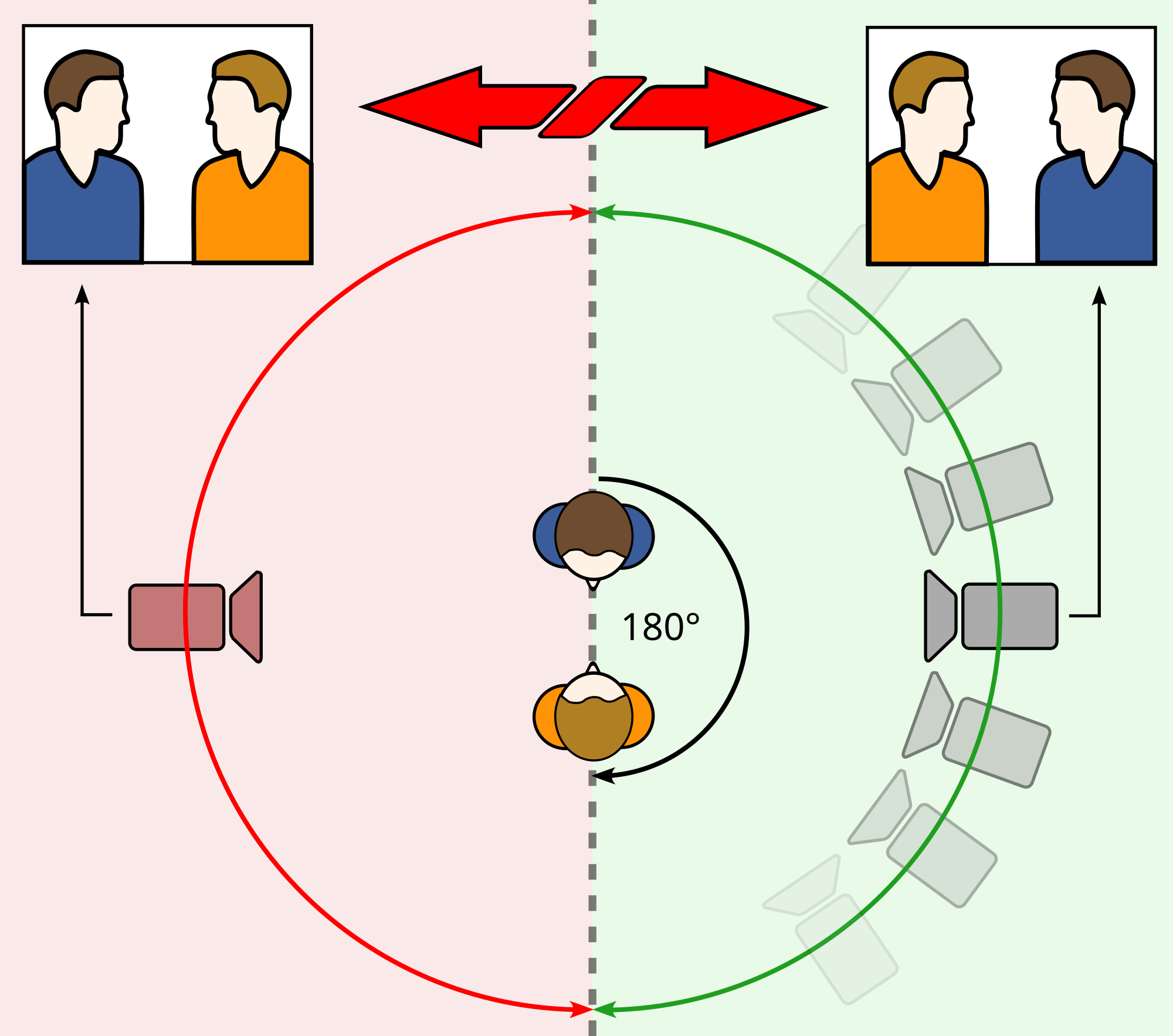 |
| 180 Degree rule Shot Reverse Shot Match on Action |

We were given very short amount of time in order to plan the story line and to film, and this also gave us an insight into how the filming of
the actual production process will be. My group had more time to film as we
planned quickly and therefore could film straightaway. Also we had improvised
along the way, due to some scenes not coming out the way we wanted them to. As we
were restricted to school premises, we had devised a script that would fit the
atmosphere perfectly, and this was based on a killer roaming around school. We
used the three principals of Shot-reverse shot as we had dialogue when Katie
and Natalia were speaking in the theater facing opposite each other. We decided
on the roles of each of us in the group; Katie and Natalia being the students,
myself as the killer and Jade as the camerawomen. We all had input on how the
scene would be shot and the scenes that were important to have consisted in the
film.
After we had decided the pre-production, such as
the roles etc. we went on to filming. We explored different camera angles and
shots to see which would create the atmosphere we were looking for and how we
could achieve that, whilst still making sure it contained the important
principals of filming. The problem that occurred was the consistency of the
lightning, as when we changed location so did the lightening and sometimes it
became too dark, for example in the theater it was too dark to shoot and the
faces appeared red, but outside in the corridors it was much easier as the
lightening was directly on the face thus easier to see the faces. Also the
sound in the theater played back and created a lot of background noise which
made it harder for the audience to hear the dialogue, and Jade and I had
realised this so in Final Cut Pro X we used a tool to get rid of the background
noise so it was clear to hear the dialogues. However, it was still not clear enough
and this can be something we need to improve on.
The three principals were used throughout the preliminary
as Shot-Reverse-shot was used when exploring the conversation between the
characters and how the audience was made invisible but still feeling they are
part of the action. We used this in our film making, when Katie and Natalia
were talking in the theater facing opposite each other, so Jade could have an
over the shoulder shot when capturing this conversation. The editing of this
scene took a long time as we had to cut and edit each side of the conversation
and then merge them together so it didn’t look disrupted.
Match on action is a technique used in editing, cut
from one shot to another view that matches the action and pace of the first
shot. This creates an impression of continuity despite the fact that the shots
may have been filmed weeks apart. An example of this in our work is when
Natalia is running through the hallway, making a left and opening the hallway
door and going inside. Even though for us to film this it may have taken a
couple of shots, the audience only sees the edited version and don’t see the discontinuity
during the film.
180 Degree Rule is a rule where characters in the
scene have the same left-right relationship with each other. We used this when
the conversation in the theater took place between Katie and Natalia.
To edit our raw footage, we used Final Cut Pro X and worked in pairs to produce two separate final videos, this made it easier to work in and also we all got a chance to trial out Final Cut Pro X even though we may never have used it before, we got familiar with the techniques on how to use it. I had worked with Jade, and from importing the raw footage to editing and adding different sounds whilst getting rid of the original one, me and Jade both learnt the features and functions of Final Cut Pro X and ended up with a completely different film then we had started off with.
We also tweaked some areas so that they wouldn’t conflict
with the idea of Match on Action and this was possible due to the mirror image
function, as before Natalia was looking in the opposite direction but in order
for her to look the way she was going to run we needed to flip the image to
make sure this could have been possible. We decided to use the track 'Tip Toe
Through the Window' by Tiny Tim as it gave it a spooky atmosphere and also
related to our film, however Jade and I slightly changed it and used a remix
version to suit our film even better as it related to a high school theme but
also created fear and suspense. This was different to Katie and Natalia’s as
they used the original without the remix and added in other sound effects to set
the scary atmosphere and mood.
 |
| Title |
 |
| Match on Action |
 |
| Shot Reverse Shot 180 Degree Rule |
 |
| Credits |
Evaluation of Preliminary Task - Katie
For our premilinary task, we were asked to create a short clip using continuity editing. Continuity editing is a technique where the audience feel as though they are watching a scene in real time. In my group, we decided to centre the idea of our clip on a school shooting.
We were given about 40-50 minutes to plan our task and during this time, we had to think about the genre of the clip, as well as who would play what character and the location of where we would film. Our group worked quickly and efficiently to get all of our ideas together and come up on a final idea for our preliminary task. We decided on filming in our school theatre and myself and Natalia took on the role of being the 2 main actors, while Jade filmed and Jasleen played a short role, as well as helping with directing me and Natalia on what to do and how the lighting should be. We stuck to using little dialogue, as we didn't want to make our clip too long or complex, so stuck to the requirement of having about 2 sentences each. In our preliminary task, we had to stick to a few guidelines, of a conversation consisting of two or more lines, a character opening a door and walking through,
and two characters sitting down across from each other, talking.
After deciding on the roles we would take on, we moved on to the production process. Before going out to film, Jade played around with the camera angels, deciding on which angle would be best to create tension and an atmosphere. As well as angles, lighting was a big issue when filming. The lighting was different in different locations of the school, for example in the hallway the lighting was a lot brighter and a better quality, due to the big windows allowing natural light to stream in. However in the theatre, where there is no natural light, the quality of the camera was slightly fuzzy and the red light we used to create a scary sort of made it hard to make out mine and Natalia's faces. This is something we could work on in the group and try to use natural lighting more in our filming. As well as lighting, we had to deal with the sound. The school hallways were quite empty and therefore caused sound to echo, also it picked up a lot of sound, like the closing of a door or other groups filming.
 Example of shot reverse shot
Match on Action is an editing technique where one shot cuts to another to match the first shot, and this makes it seem the action has taken place in real time. An example of this in our work can be seen when Natalia is running through the hallways and turns the corner to the theatre to open the door. Although the shots are taken from different places, it makes the audience feel that she never stopped running.
 180 Degree Rule is a rule where characters in the scene have
the same left-right relationship with each other. We used this when the
conversation in the theatre took place between myself and Natalia.
180 Degree Rule is a rule where characters in the scene have
the same left-right relationship with each other. We used this when the
conversation in the theatre took place between myself and Natalia.
We were given about 40-50 minutes to plan our task and during this time, we had to think about the genre of the clip, as well as who would play what character and the location of where we would film. Our group worked quickly and efficiently to get all of our ideas together and come up on a final idea for our preliminary task. We decided on filming in our school theatre and myself and Natalia took on the role of being the 2 main actors, while Jade filmed and Jasleen played a short role, as well as helping with directing me and Natalia on what to do and how the lighting should be. We stuck to using little dialogue, as we didn't want to make our clip too long or complex, so stuck to the requirement of having about 2 sentences each. In our preliminary task, we had to stick to a few guidelines, of a conversation consisting of two or more lines, a character opening a door and walking through,
and two characters sitting down across from each other, talking.
After deciding on the roles we would take on, we moved on to the production process. Before going out to film, Jade played around with the camera angels, deciding on which angle would be best to create tension and an atmosphere. As well as angles, lighting was a big issue when filming. The lighting was different in different locations of the school, for example in the hallway the lighting was a lot brighter and a better quality, due to the big windows allowing natural light to stream in. However in the theatre, where there is no natural light, the quality of the camera was slightly fuzzy and the red light we used to create a scary sort of made it hard to make out mine and Natalia's faces. This is something we could work on in the group and try to use natural lighting more in our filming. As well as lighting, we had to deal with the sound. The school hallways were quite empty and therefore caused sound to echo, also it picked up a lot of sound, like the closing of a door or other groups filming.

Match on Action is an editing technique where one shot cuts to another to match the first shot, and this makes it seem the action has taken place in real time. An example of this in our work can be seen when Natalia is running through the hallways and turns the corner to the theatre to open the door. Although the shots are taken from different places, it makes the audience feel that she never stopped running.
 180 Degree Rule is a rule where characters in the scene have
the same left-right relationship with each other. We used this when the
conversation in the theatre took place between myself and Natalia.
180 Degree Rule is a rule where characters in the scene have
the same left-right relationship with each other. We used this when the
conversation in the theatre took place between myself and Natalia.Evaluation of the preliminary task: Natalia Compa
We made a Preliminary Task video in preparation for our opening to a thriller movie in order to get familiar with filming and continuity editing. Continuity editing is an editing technique which makes the audience feel as though they are watching in person, this makes the observers become immersed in our video clips. As a group we were not given much time to plan what we were going to film, within about fifteen to twenty minutes we had to decide what our story would be, what location we would use and how we would film it. Katie and I featured in the video while Jade filmed and Jasleen helped with filming and directed. We all contributed in giving ideas on what angles we should film from.
We had a limited amount of time during pre-production, after some discussion we agreed on a the genre and chose a horror. In brief our story was that there was a shooter in the school but nobody knew of their location, two girls were trying to find each other to hide from this murderer on the school premises.
Unfortunately due to only being allowed to film on the school premises we did not have much of a choice in location
therefore we could not go into much detail within our preliminary video, on the other hand that gave us more time to think about the areas that we were told to cooperate and focus on. The three main actions were: a door opening, one character approaching the other and a short conversation between the two; we were allowed to present this in anyway that we desired, using a variety of shots and angles. In the production process while filming our videos we were also limited in time, therefore it was impossible to become completely familiar with the video camera (DLSR50) however we did get a chance to play around with different camera angles and shots, as well as this we decided to use the school's theatre as the basis of our location which allowed us to play with the lighting and to create an eerie atmosphere for our horror. The red lighting created a few shadows, also adding to the creepy atmosphere.
Due to limited time and little experience with the video camera and filming techniques we came across some negatives during the production process. The fact that it was very dark in some areas of the theatre the camera did not focus on the image very well which created quite blurry shots while other times the darkness of the theatre was a positive because it captured some fantastic shots, especially while I was walking through the door, in the future we will be well aware of the negatives which can come about with lighting and we will avoid getting caught up in this.
We were asked to focus on three key elements in filming: Shot reverse shot, Match on action and The 180 degree rule which enable us to immerse the audience in our clip through it's realism and fluidity.
Match on action : refers to film editing and video editing techniques where the editor cuts from one shot to another view that matches the first shot's action. An example of this in our work is where I put my hand on the door handle and go inside, to film this one action we had to film twice from both sides of the door and then splice the two together later in post-production, this created the illusion that I opened the door and walked through even though it had to be filmed twice.
Shot reverse shot: a film technique where one character is shown looking at another character and then the other character is shown looking back at the first character. This is shown in work whereby Katie and I have a conversation in the theatre questioning the whereabouts of the shooter who is on the school premises. When filming the shot reverse shot it was made similarly to the match on action,the conversation had to be filmed twice, once from behind my shoulder showing Katie's dialogue and another time filming the same narrative but from behind Katie's shoulder to show my dialogue, we then in pairs edited this scene (as well as the rest of the video) using Final Cut Pro X to get the two separate conversations into one with questions and responses.
Finally, 180 degree rule is a basic guideline regarding the on-screen spatial relationship between a character and another character or object within a scene.
All characters never cross the line and so the shot will never look flipped or false, this enabled the video to look more realistic and so the audience can feel as though they are there watching the conversation happening in person, this again may make the audience immersed in the film as the video becomes very fluid without a sign of two different clips just simply being played, this is clear within the conversation between Katie and I in the GIF above explaining the shot reverse shot.
As well as being able to edit, cut and splice all the short clips together in the post-production process using an editing software, we were able to play about and discover sound effects and music. Through YouTube and converting to MP3 websites we were able to cooperate two different songs in our video, one of them being "Tiptoe through the tulips" and the other one was the theme tune from Jaws just to help us create a more scarier atmosphere and a more believable horror. Personally I think for our first preliminary task, bearing in mind the limited time and experience we had with filming and editing, our preliminary task was very successful because we successfully focused on all areas that we were asked to focus on and created something clear and understandable, using different types of camera shots and angles, an editing software and music.
We had a limited amount of time during pre-production, after some discussion we agreed on a the genre and chose a horror. In brief our story was that there was a shooter in the school but nobody knew of their location, two girls were trying to find each other to hide from this murderer on the school premises.
 |
| E.g. Storyboard |

Unfortunately due to only being allowed to film on the school premises we did not have much of a choice in location
therefore we could not go into much detail within our preliminary video, on the other hand that gave us more time to think about the areas that we were told to cooperate and focus on. The three main actions were: a door opening, one character approaching the other and a short conversation between the two; we were allowed to present this in anyway that we desired, using a variety of shots and angles. In the production process while filming our videos we were also limited in time, therefore it was impossible to become completely familiar with the video camera (DLSR50) however we did get a chance to play around with different camera angles and shots, as well as this we decided to use the school's theatre as the basis of our location which allowed us to play with the lighting and to create an eerie atmosphere for our horror. The red lighting created a few shadows, also adding to the creepy atmosphere.
Due to limited time and little experience with the video camera and filming techniques we came across some negatives during the production process. The fact that it was very dark in some areas of the theatre the camera did not focus on the image very well which created quite blurry shots while other times the darkness of the theatre was a positive because it captured some fantastic shots, especially while I was walking through the door, in the future we will be well aware of the negatives which can come about with lighting and we will avoid getting caught up in this.
We were asked to focus on three key elements in filming: Shot reverse shot, Match on action and The 180 degree rule which enable us to immerse the audience in our clip through it's realism and fluidity.
Match on action : refers to film editing and video editing techniques where the editor cuts from one shot to another view that matches the first shot's action. An example of this in our work is where I put my hand on the door handle and go inside, to film this one action we had to film twice from both sides of the door and then splice the two together later in post-production, this created the illusion that I opened the door and walked through even though it had to be filmed twice.
 |
| Example of match on action in our work |
 |
Example of shot reverse shot in our work
|
|
| Example of the 180 degree rule |
As well as being able to edit, cut and splice all the short clips together in the post-production process using an editing software, we were able to play about and discover sound effects and music. Through YouTube and converting to MP3 websites we were able to cooperate two different songs in our video, one of them being "Tiptoe through the tulips" and the other one was the theme tune from Jaws just to help us create a more scarier atmosphere and a more believable horror. Personally I think for our first preliminary task, bearing in mind the limited time and experience we had with filming and editing, our preliminary task was very successful because we successfully focused on all areas that we were asked to focus on and created something clear and understandable, using different types of camera shots and angles, an editing software and music.
Evaluation of the Preliminary Task
For our preliminary task we were asked to devise a short clip that demonstrated continuity editing. Continuity editing is a technique that is used to make the audience feel as though they are watching I real time. We were given a short amount to plan and film this task,however, my group and I worked fast and efficiently in planning to enable us to give us the most amount of time to film the preliminary video. As a group we decided upon a narrative to carry out for our video. We decided that because we could only use school space, it would work perfectly to carry out a school shooting take place in our school. We decided to use minimal dialogue and kept it to the required dialogue as we felt that it would be best to keep it simple for this piece. As a group we worked out the roles we would like to carry out: Katie and Natalia would take on the roles of students in the school and Jasleen played the role of the shooter (as well as directing). I took on the job of filming the video, however I did not decide to direct anything because I felt that it was more of a group input task, however, we did have to stick to a few guidelines for the task: a conversation consisting of two or more
lines, a character opening a door and a shot of a character
walking.
After deciding upon the narrative, roles, script and locations, it was time to move on to production. Before filming, we played around with angles, levels the camera would be best suited for the shot and how we would film the action whilst keeping in mind that it had to be fluid as it was a continuity editing task. Because we filmed inside, lighting was consistent throughout majority of shots, however, when there was a change in location, lighting became darker, i.e. in the theatre it was a lot darker which meant that the camera picked up less detail and made the image fuzzy. Because the school was empty at the time and the spaces we used were big, a lot of sound was reverberated and made it quiet when picked up by the camera's microphone. This was definitely a downfall and something we can learn to improve. The requirements of this task stated that we had to use three key principles of filming to carry out this task: Shot Reverse Shot, Match on Action and the 180 Degree Rule. These elements allow for a more realistic and make the video move fluidly and in real time, as if the audience was there.
Shot Reverse Shot is used to capture a conversation engaged by two characters. An example of when we used this was when Katie and Natalia were sat opposite each other and engaged in a conversation about what was happening and the killer's whereabouts. We edited two seperate shots taken from each side of the conversation and edited to get the reaction of the speaker and the person engaged in the conversation.

Match on Action is an editing technique whereby one shot cuts to another to portray the action that has taken place in the first shot; this must match the original shot. An example of this in our work can be seen when Natalia is running through the hallways and turns the corner to the theatre to open the door. Although the shots are taken from different places, it makes the audience feel that she never stopped running.
180 Degree Rule is a rule where characters in the scene have the same left-right relationship with each other. We used this when the conversation in the theatre took place between Katie and Natalia.
To edit our raw footage, we used Final Cut Pro X and worked in pairs to produce two seperate final videos. Jasleen and I worked together and Natalia and Katie worked together. By using different sound, editing and other editorial enhancements, we ended up with completely different final products, even though we started off with the same raw footage.
In addition, we were able to flip an entire clip, an example of this was the section of Natalia looking around and down to the floor before running through the door and down the hallway. This made it seem as if she was looking towards the door before receiving the text from Katie to meet in the theatre. Our two editing groups decided to use the track by Tiny Tim 'Tip Toe Through The Tulips', however, Jasleen and I went with a remixed version with a fast pace to create a sense of panic and fear. Katie and Natalia, however, went with the original and use only a small portion of the track because they decided to use some scary music that builds up in intensity without increasing pace.
After deciding upon the narrative, roles, script and locations, it was time to move on to production. Before filming, we played around with angles, levels the camera would be best suited for the shot and how we would film the action whilst keeping in mind that it had to be fluid as it was a continuity editing task. Because we filmed inside, lighting was consistent throughout majority of shots, however, when there was a change in location, lighting became darker, i.e. in the theatre it was a lot darker which meant that the camera picked up less detail and made the image fuzzy. Because the school was empty at the time and the spaces we used were big, a lot of sound was reverberated and made it quiet when picked up by the camera's microphone. This was definitely a downfall and something we can learn to improve. The requirements of this task stated that we had to use three key principles of filming to carry out this task: Shot Reverse Shot, Match on Action and the 180 Degree Rule. These elements allow for a more realistic and make the video move fluidly and in real time, as if the audience was there.

Match on Action is an editing technique whereby one shot cuts to another to portray the action that has taken place in the first shot; this must match the original shot. An example of this in our work can be seen when Natalia is running through the hallways and turns the corner to the theatre to open the door. Although the shots are taken from different places, it makes the audience feel that she never stopped running.
180 Degree Rule is a rule where characters in the scene have the same left-right relationship with each other. We used this when the conversation in the theatre took place between Katie and Natalia.
To edit our raw footage, we used Final Cut Pro X and worked in pairs to produce two seperate final videos. Jasleen and I worked together and Natalia and Katie worked together. By using different sound, editing and other editorial enhancements, we ended up with completely different final products, even though we started off with the same raw footage.
In addition, we were able to flip an entire clip, an example of this was the section of Natalia looking around and down to the floor before running through the door and down the hallway. This made it seem as if she was looking towards the door before receiving the text from Katie to meet in the theatre. Our two editing groups decided to use the track by Tiny Tim 'Tip Toe Through The Tulips', however, Jasleen and I went with a remixed version with a fast pace to create a sense of panic and fear. Katie and Natalia, however, went with the original and use only a small portion of the track because they decided to use some scary music that builds up in intensity without increasing pace.
 |
| TITLE |
 |
| MATCH ON ACTION |
 |
| SHOT REVERSE SHOT |
Subscribe to:
Posts (Atom)